 English
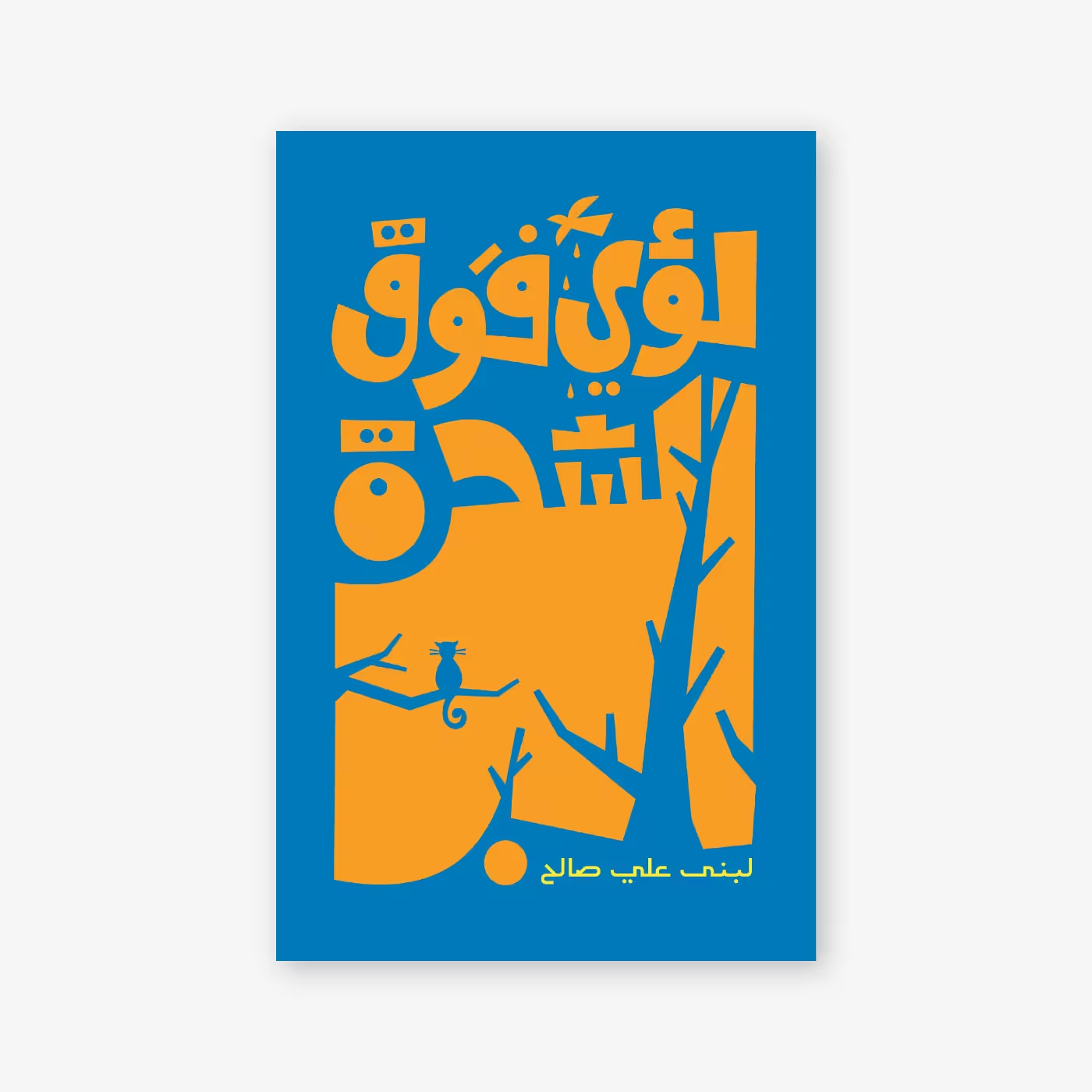
Loai Up the Tree
$ 11.00
A novel that blends comedy and drama, depicting the stage of high school graduation (Tawjihi) with all its pressures and challenges.
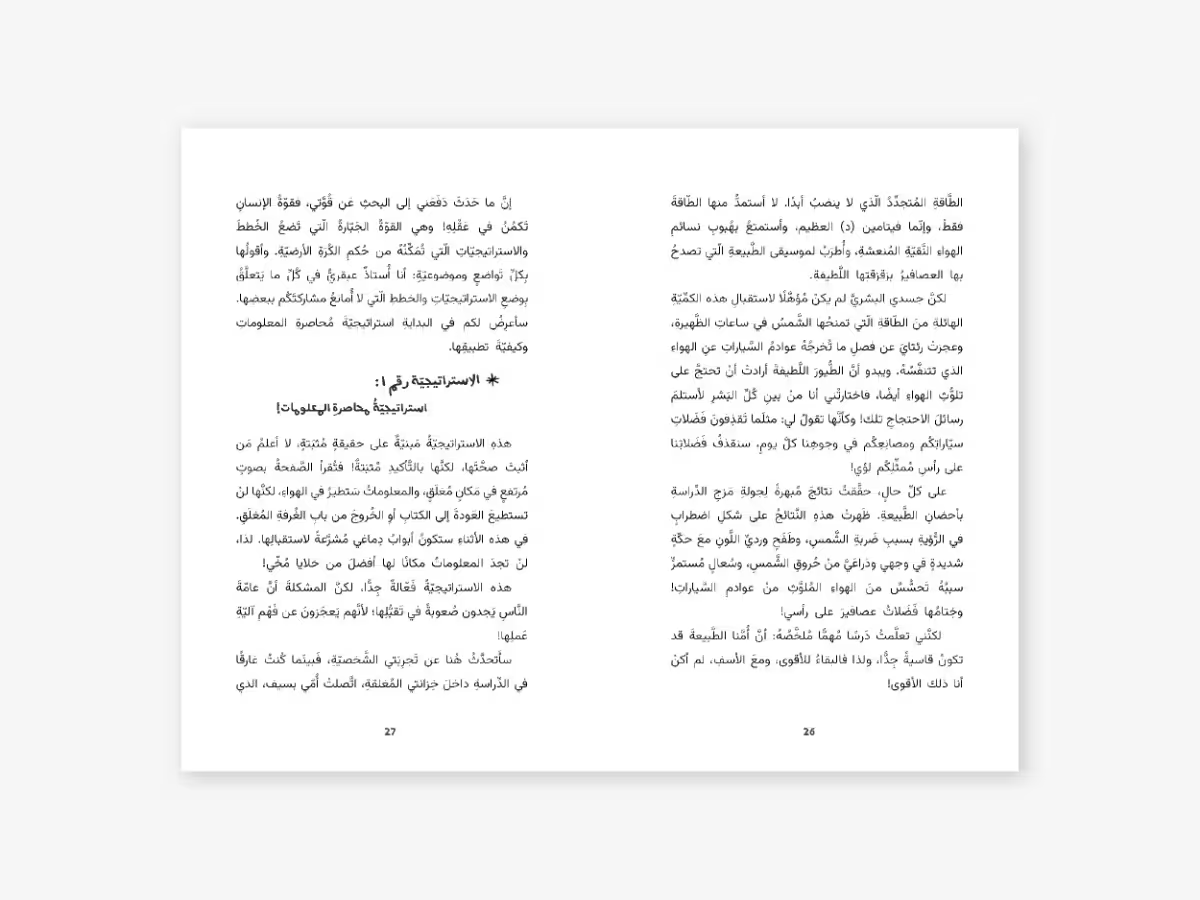
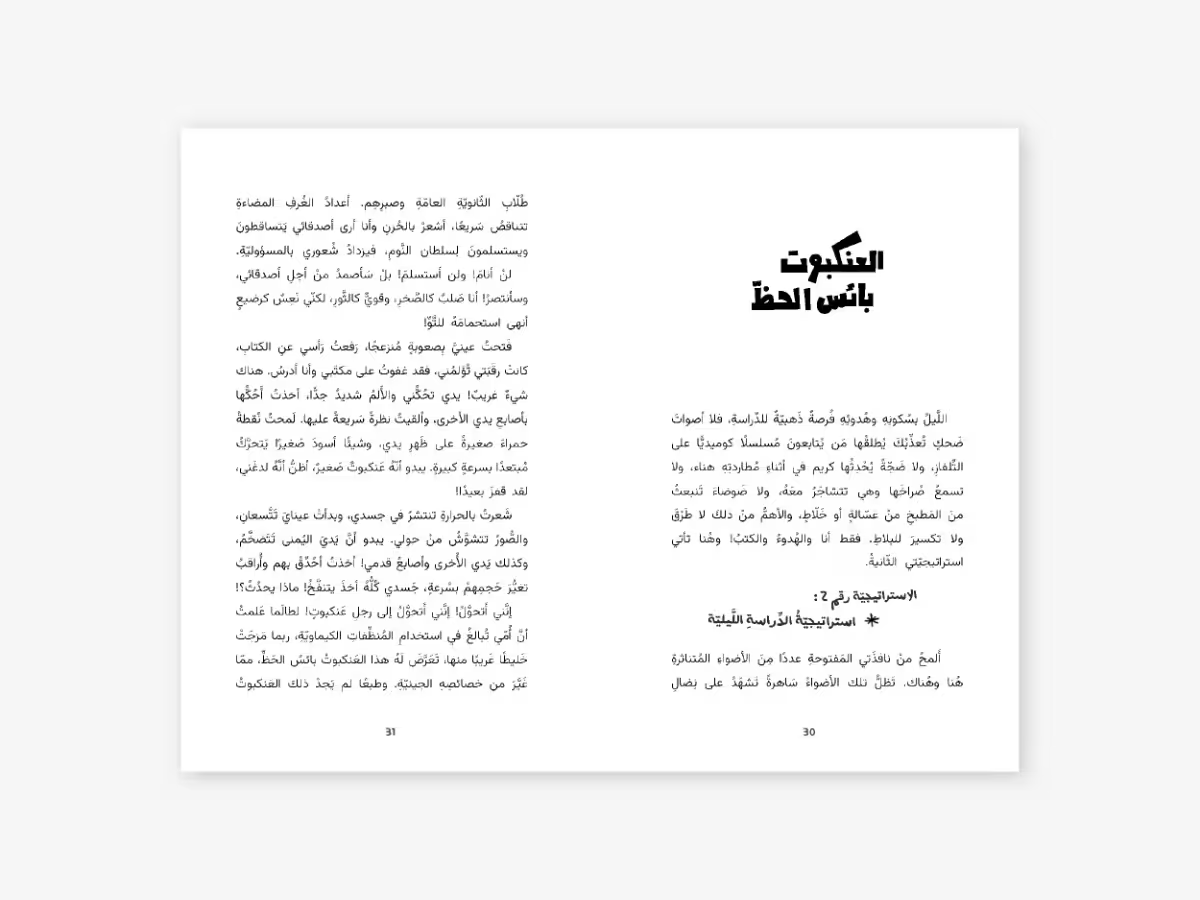
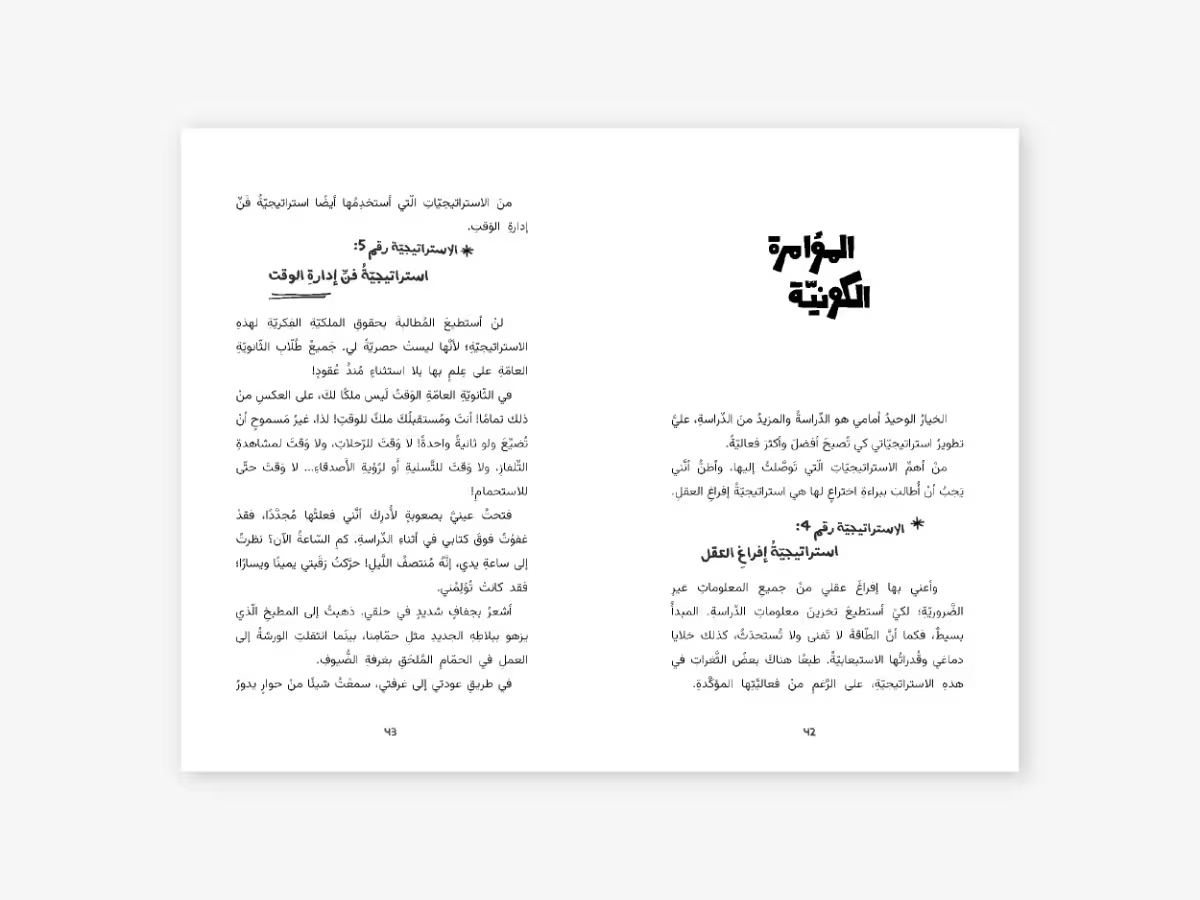
Loai narrates in a humorous and satirical style what he faces as he strives to fulfill his family’s dream of becoming a doctor. Loai is convinced that he will excel in the Tawjihi exams and that he will not be stressed or pressured. He recounts the strategies he used in studying, which reduced stress and helped him absorb information and achieve high results.
Get ready to laugh and join Loai on his brave journey above the tree. Will he succeed in achieving his true dream?
Loai Up the Tree Parent and Teacher Guide
The novel mirrors the stage of Tawjihi, as it is called in Jordan, which constitutes a familial concern and a troubling social phenomenon. It discusses it through the perspective of the adolescent Loai, who narrates the events of the novel in a satirical and humorous manner.
Loai enters this stage with determination to fulfill his family’s dream and become a doctor. Thus, he embarks on a journey of studying filled with pressures and various forms of stress from school, family, and friends. He invents bizarre strategies to achieve a high GPA that qualifies him for medical school.
After tremendous effort, difficulties, and challenges, the results are released, and Loai achieves a high GPA, but it doesn’t qualify him for medical school.
At first, he is deeply saddened, but he later discovers that medicine was not his true desire; it was his parents’ desire. Loai confronts his parents with his true desire, which is to study Arabic literature. His parents vehemently reject this desire, so Loai climbs a tree in protest. After numerous attempts to get him down, Loai descends, hoping that his parents have changed their minds.
However, he is shocked when they bring him the books for the new school year to repeat the entire year and achieve a higher GPA to study medicine. In response, he climbs back up the tree.
Questions for discussion
- Luay is a smart and high-achieving student. If he didn’t face all those pressures, do you think he would have achieved a higher GPA? Where do you think the flaw lies in Luay’s approach during this stage?
- Perhaps you noticed in the novel the importance of the role played by parents in supporting and motivating a Tawjihi student. How was Luay’s family’s role during this stage? Did they provide the right kind of support? What are the most important things that families should consider when dealing with Tawjihi students?
- Luay came up with several study strategies, most of which ended in failure. Are there any other strategies that might be successful and beneficial for any student? Please explain your answer.
What do you think is the most important strategy that Loai adopted, and can you apply it in your own studies? - Having a supportive friend can be very important and have a positive impact. What is your opinion of Loai’s friend Basl? Do you think his assistance to Loai represents a genuine friendship? Imagine if you had a friend like Basl, how would you respond to his advice and ideas?
- The novel highlights Saif’s role in supporting Loai based on his mother’s request. Try to imagine Saif’s personality when he was in high school and compare it to Loai’s. What differences do you see between them?
- The novel addresses the issue of the stigma associated with certain professions. How did Samih react when he saw Loai with his father? Discuss with your teacher the importance of professional careers and society’s perception of them.
- Some families force their children to study scientific majors such as medicine and engineering, among others. What makes these majors a common choice despite sometimes having limited job opportunities?
- Loai resorts to magic and witchcraft after convincing Basl to seek a higher GPA. Have you ever heard of similar practices? What are the risks of resorting to such solutions?
- What is the significance of maintaining a healthy and balanced diet for mental and physical health, as mentioned in the novel?
- Modern means and technologies were not available in 1994. Describe the changes that have occurred in the high school stage after technological advancements in terms of studying methods and obtaining results.
- In your opinion, what are the drawbacks of relying entirely on supplementary books and summaries? Can they replace the study of the actual textbook?
- Do you think that the reliance on private tutoring might be due to shortcomings in the school’s interaction with students? What are the reasons that make each student feel the need for such tutoring, sometimes for all subjects?
- If you had a sibling about to enter the Tawjihi stage, what advice would you offer them?
| ISBN | 9789957042554 |
|---|---|
| Pages | 104 pages |
| Binding | Soft Cover |
| Weight | 0.122 kg |
| Size | 19.8 × 12.9 cm |
Only logged in customers who have purchased this product may leave a review.
Related Products
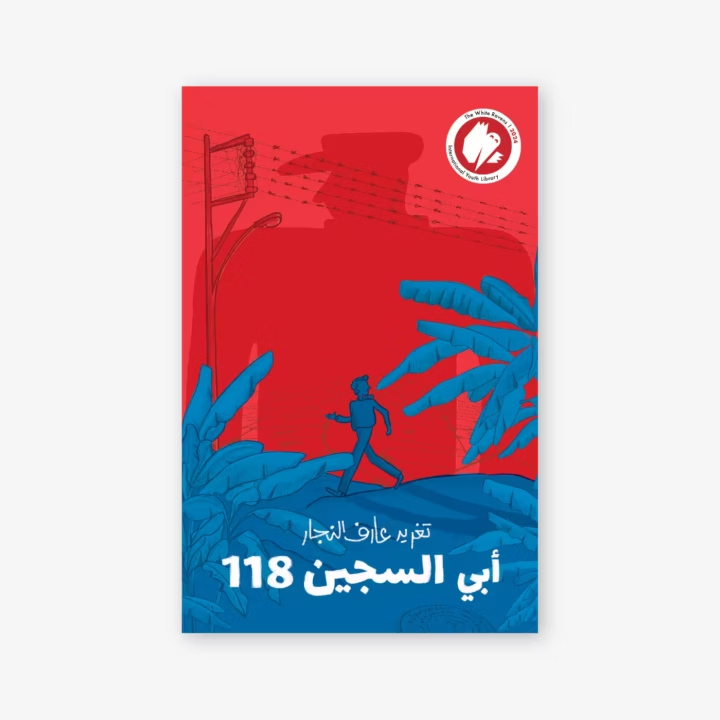
When 16-year-old Hussam returns home from his friend’s house, he is shocked to find police cars at their building and his father handcuffed and arrested by the police.
All the evidence points to his fathers’ guilt but Hussam has no doubt of his innocence. Hussam is now faced with two options, he either looks on helplessly as his father goes to jail or tries to find the evidence to clear him with the help of his friends.
A fast-paced mystery that will have the reader excitedly turning the pages!
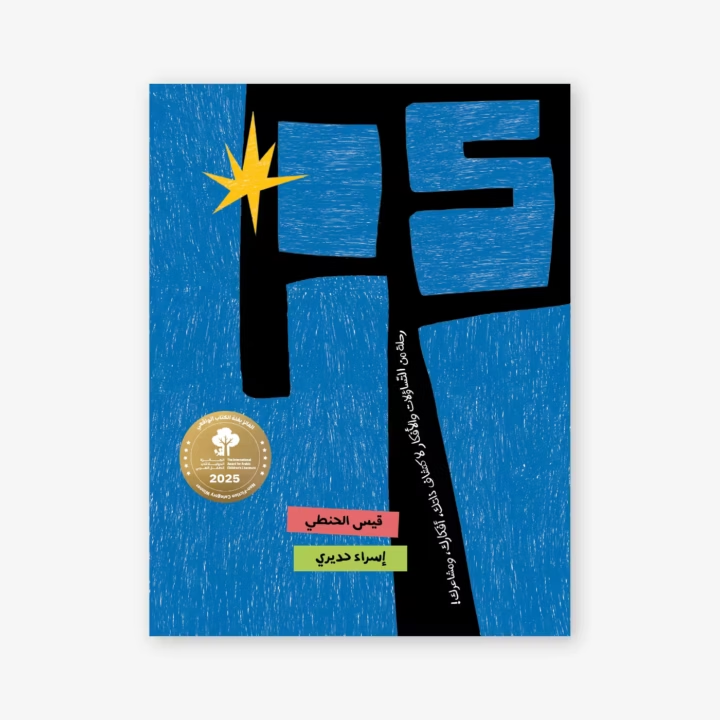
This beautifully crafted book introduces readers to the world of philosophy, and invites them to pause, reflect, and explore the deeper meaning behind seemingly ordinary questions.
Designed as a safe, personal space for self-discovery, the book encourages free expression—through writing, drawing, or thinking out loud.
It helps readers build a stronger connection with themselves, while developing confidence, emotional insight, and critical thinking skills.
Whether as a gentle introduction to philosophical thinking or a companion for quiet reflection, this book plants the seeds of lifelong curiosity—and a love for open-ended questions that help shape who we are.
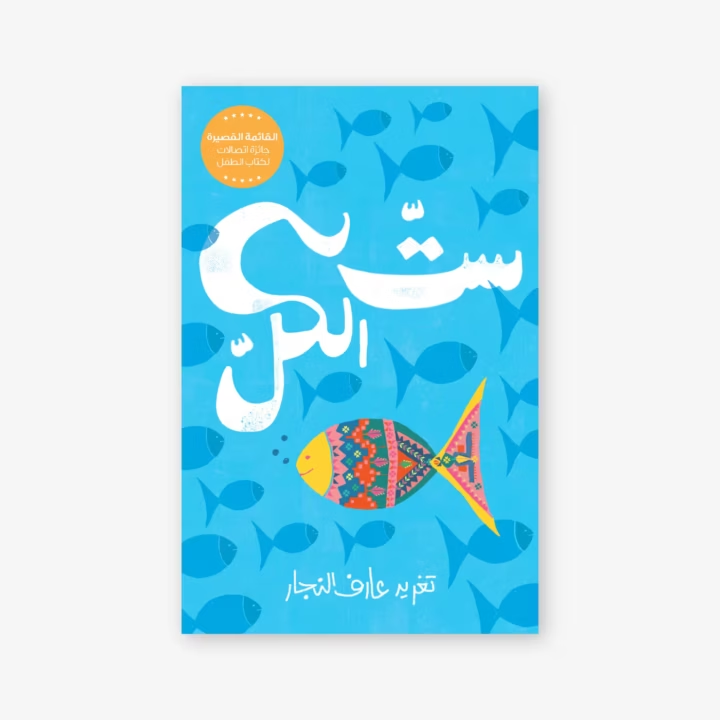
After the tragic death of her elder brother, and an unfortunate accident that leaves her father paralyzed and bound to his wheelchair, Yusra’s family is forced to beg for handouts from their neighbors. Between her family’s struggles and the restrictions of life in occupied Palestine, Yusra feels like the walls are closing in on her.
Then she has an idea: she decides to fix up her father’s fishing boat and take up his trade to become the first and only fisher woman in Gaza.
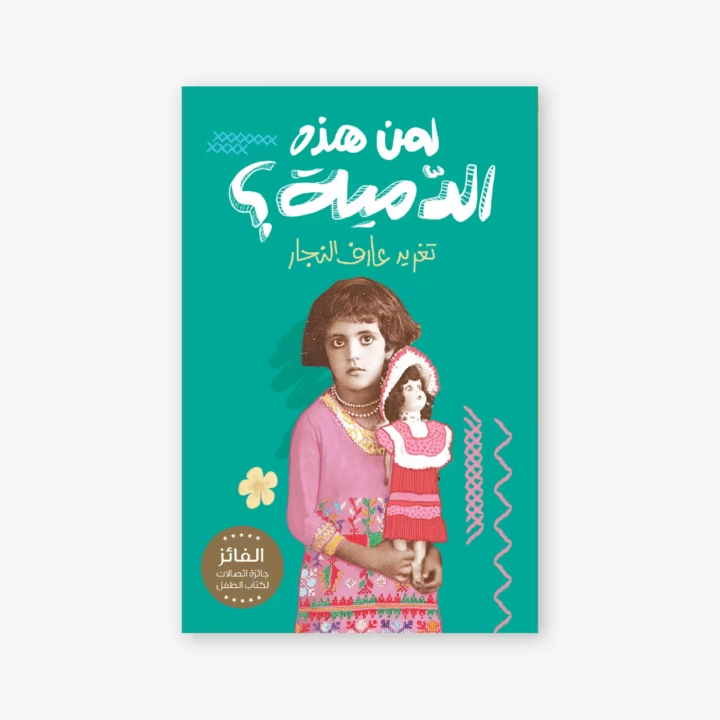
Born and raised in the US, 17-year-old Arwa is looking for a special gift to give to her grandmother Laila, a university professor in Chicago.
Never in her wildest dreams did she expect to find such an unbelievable present. Together with her best friend Sarah she embarks on an exciting adventure to find out how her Grandma’s present ended up in Chicago all the way from Jaffa Palestine.
As the story of a family of Palestinian immigrants unfolds, Arwa must find the right balance between two cultures and come to terms with her family’s painful history.
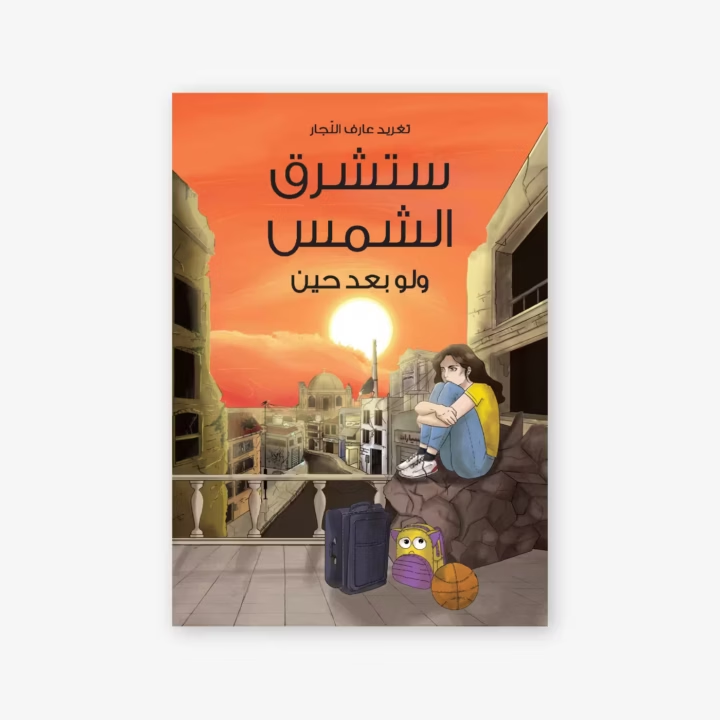
Amid the fast-moving events in Syria, Shaden, captain of the basketball team in her school, suddenly realizes that her world is about to change completely and that she must be strong and more responsible than she has ever been.
Will she be able to face the difficulties awaiting her and find a haven for herself?
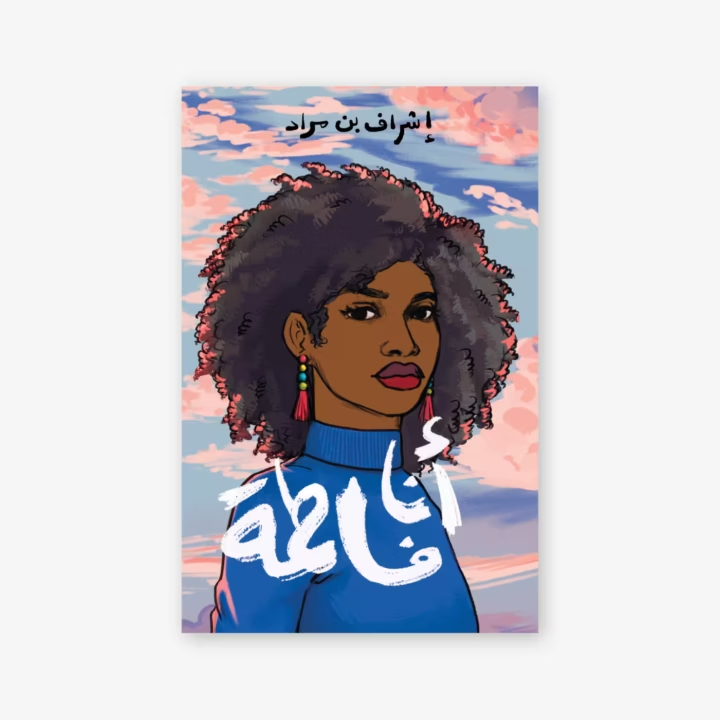
I Am Fatima is a compelling social novel, opening with a distressing incident where Fatima, a young black girl, experiences the jarring effects of racism.
However, Fatima refuses to succumb to this injustice. She resolves to combat racism with utmost determination.
This novel serves as an inspiration to young individuals, urging them to uphold their principles and bravely confront injustice.
It emphasizes that one’s value should never be defined by their skin color, and that every individual deserves a life of dignity.
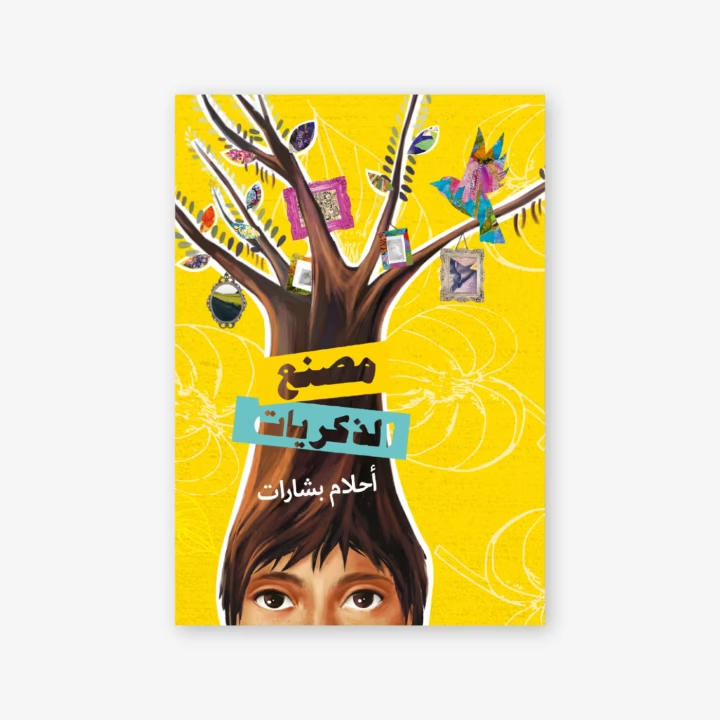
Jaber, Rafia, Mansour and Adli are ready to move to 10th grade. They have been good friends since they were in KG. Under the Carob tree on Asour Hill the friends play the Memory Game and share roles that will soon expose the hidden facets of each of their personalities. What is it that pushes Jaber to protect his memories? Why did Jaber create a Memory factory in his imagination? Will Jaber succeed in moving out of the memory circle to real life? A moving novel full of deep emotions honoring memories and the will to live in the present.
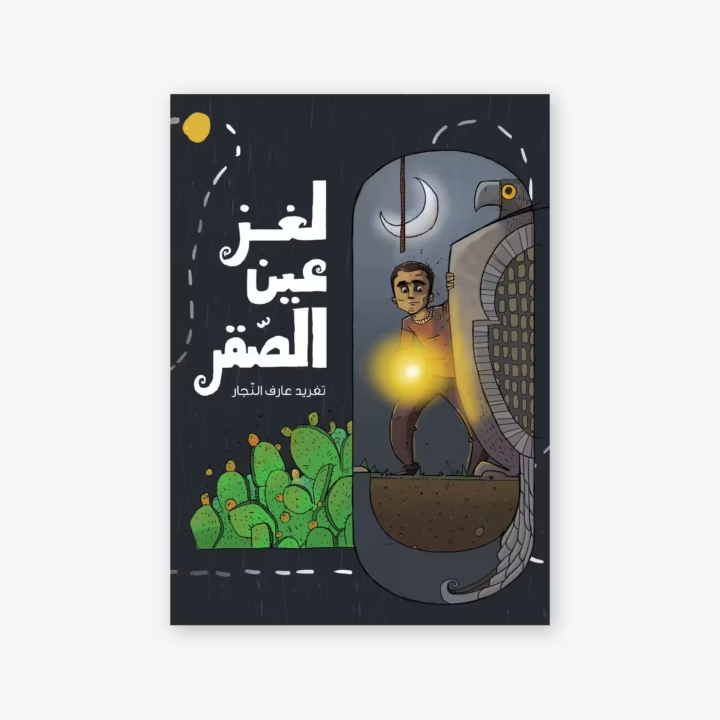
17-year-old Ziad who lives in Qalandia refugee camp finds himself the sole bread winner of his family after his activist father gets arrested and becomes an administrative prisoner.
We first meet Ziad while he’s selling hot tea to a long line of people waiting in their cars to cross the checkpoint. Ziad lives with his great grandmother, mother, sister and younger brother. His great Grandma is senile and keeps repeating stories of the past but there is one story – in particular- that never changes. It is the story of the family’s lost gold left in their village – Lifta – when they were forced to flee during the war.
It is a story about yearning to ‘return’ to the ancestral village his people were forced to leave and not allowed to return.
Reviews
There are no reviews yet.