 English

Saadeh the Monkey – Nursery Rhymes 2
$ 6.16
Illustrated by:
These traditional nonsense rhymes combine familiar and strange out of context elements and situations as well as made-up words that have rhythm. They also deal with serious issues that reflect fears and situations in the culture. Fear of wild animals that prey on their livestock. Caring for animals.
Waiting for loved ones to come back from their travels.
Titles of the Rhymes in Saadeh the Monkey book are:
- Ree Ree Reeta
- Tangerine Tangerine
- Grandpa’s Bald Head
- Saadah The Monkey
- Bolbol Balabel
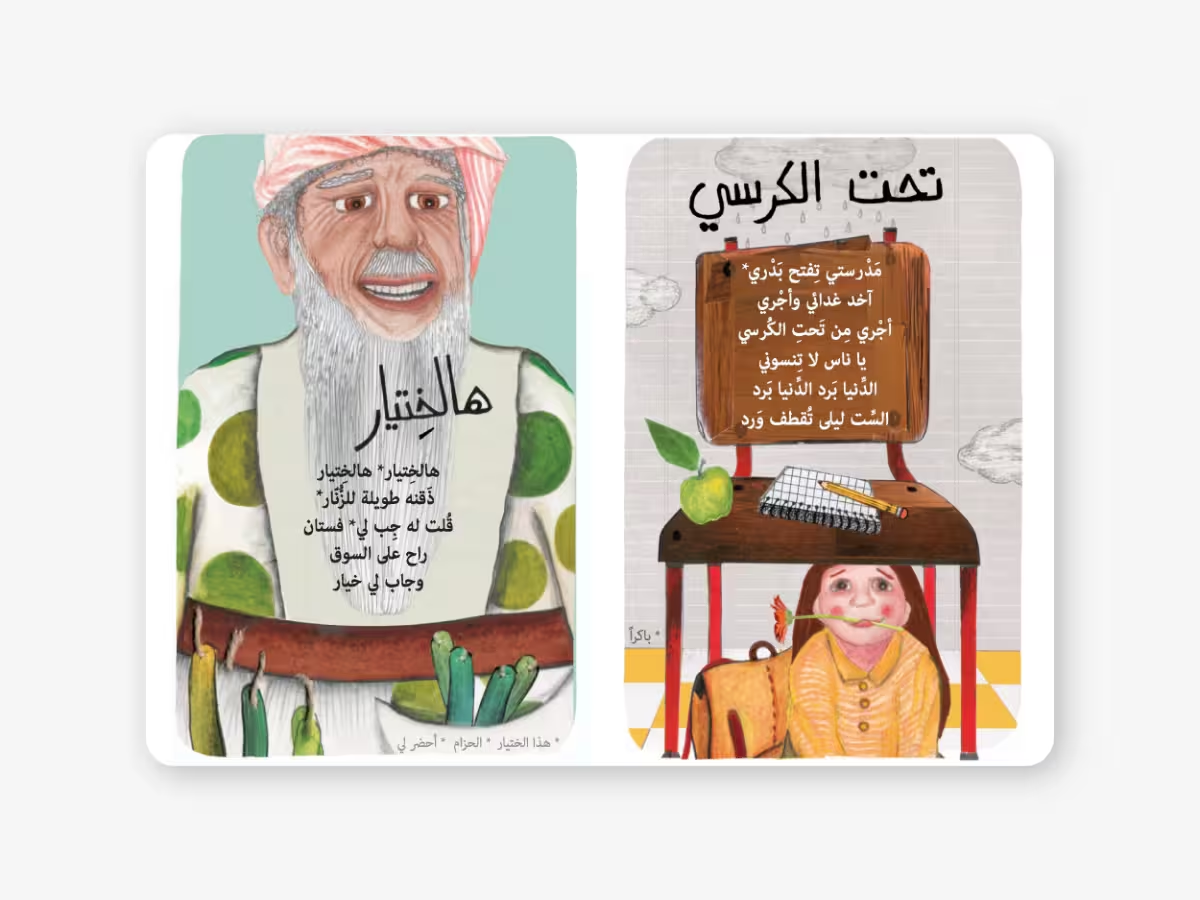
- Under The Chair
- This Old Man
- Abdul Samad
- Tiki Tiki Sambo
- Walking Camel
- Sarandah Ya Sarandah
- Suzzaneh
Saadeh the Monkey Parent and Teacher Guide
Silly Rhymes, are rhymes that help develop a child’s sense of humor. They give children a chance to have fun with words and sounds and the freedom to laugh at silly situations that don’t make much sense. The rhyme “Saadeh the Monkey” for example is about a monkey feeding a cat an aubergine.
The rhyme “Grandpa’s Bald Head” starts with the funny mental image of rain falling on Grandpa’s bald head then continues to talk about the Grandfather beating a wolf that came sneaking up on him and sending him whining away. This funny rhyme was probably used to deal with the fears of children in villages from wild animals like wolves. Some of the rhymes have made-up words that are fun to repeat like; “ree ree rita fala fala fita” and “tiki tiki sambo tori limbo”.
Children have great fun repeating these made-up words and pretending that they can speak exotic languages. Then there is the hard of hearing old man with a beard that comes down to his belt, in the rhyme “This Old Man”. His wife told him to go to the souk to get her a dress but he came back with cucumbers instead.
The rhyme “Abdul Samad” may have been used to release feelings of jealousy in children after the arrival of a new baby sibling. The newborn baby is put in out of context places which allows the child to laugh at the ridiculousness of the situation. In the rhyme “Bolbol Balabel” the traditional rhyme can be understood on two levels one of a bird jumping from tree to tree and bringing news and the other is an underlying traditional meaning which reflects the great yearning and waiting for a long absent relative.
Bolbol is a bird that has the freedom to fly afar and see the road ahead from the top of trees. He brings the good news that the absent ones are coming back and so the call is out to prepare for their arrival and to rejoice. Other rhymes such as “Walking Camel” used to be a group game which children used to play.
On each syllable in the rhyme the child makes a movement that’s related to the rhyme. Here’s an illustration of the movements made with the words of the rhyme: the rhyme starts with the words “Jamal Mashi” (meaning camel walking) – fingers make walking movement. ‘Al mamashi ( meaning legs) – hands are put on thighs. Ijeet ashiddoh (meaning I tried to pull it) hands on chest making pulling movement. Khataf shahi (meaning stole my head wear) hands on head.
There is a leader to this game and after a few practice turns the leader starts saying the words of the rhyme while making the wrong movement.
The kids who fall for this are out of the game and so on. The rhyme encourages concentration and makes children laugh.


| ISBN | 9789957040680 |
|---|---|
| Pages | 18 pages |
| Binding | Board Book |
| Weight | 0.198 kg |
| Size | 21 × 15 cm |
Only logged in customers who have purchased this product may leave a review.
Related Products
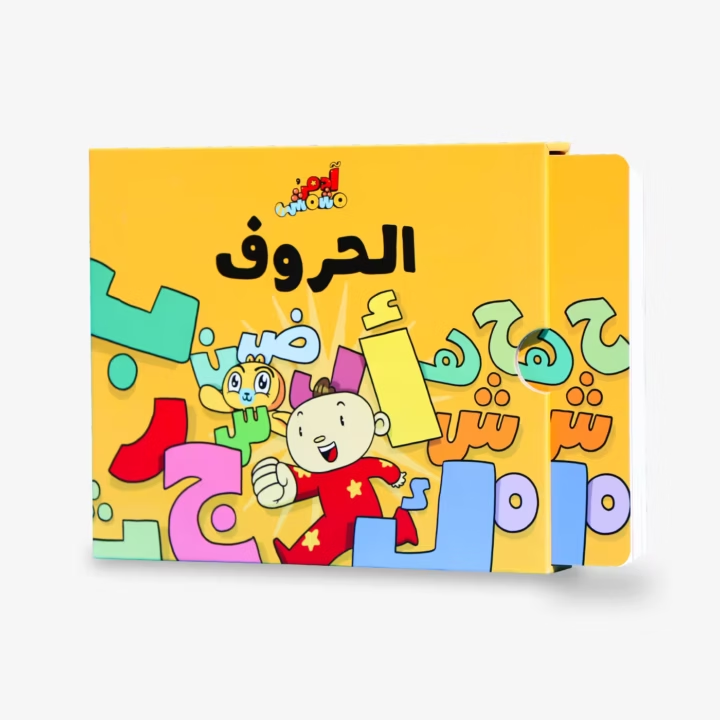
The Alphabet book is an accordion book that children will enjoy flipping through and opening to see the entire alphabet laid out in front of them. Paired with the catchy Adam & Mishmish Alphabet song learning the Alphabet has never been so fun!
The Alphabet book is linked to a song and an Augmented Reality App through QR codes at the back of the book and the Lets Go Series Set so that parents and children can enjoy interacting and singing along while flipping through the book!
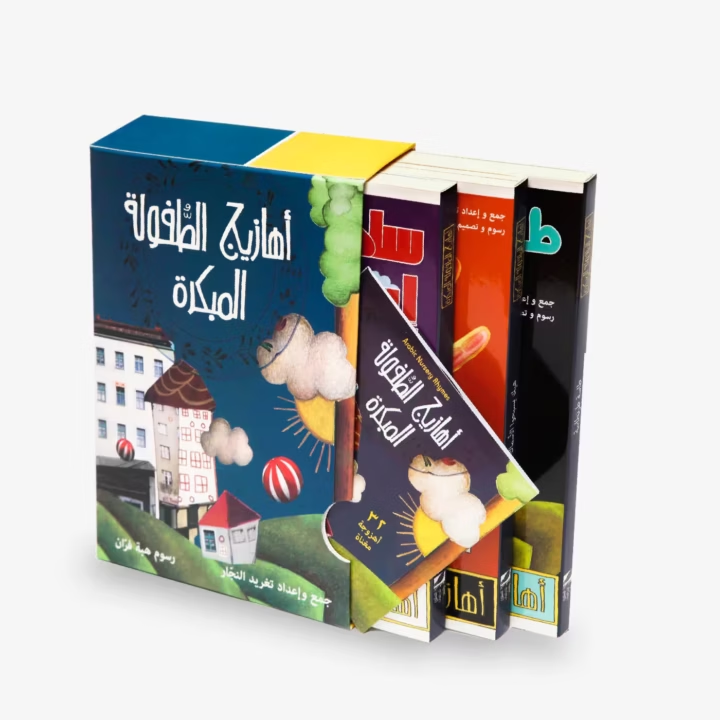
Arabic Nursery Rhymes Set, is a collection of 32 popular Arabic rhymes from different parts of the Arab world.
The collected rhymes were categorized according to subjects and presented in three beautifully illustrated board books along with an audio CD.
The books in the set are entitled:
- My Turtle Nahla (Rhymes about animals)
- Tasseh Tarantaseh (Miscellaneous rhymes)
- This is The Way Fish Swim (Rhymes with hand gestures)
An audio Cd is included in the set to help both parent and child sing along these lovely rhymes.
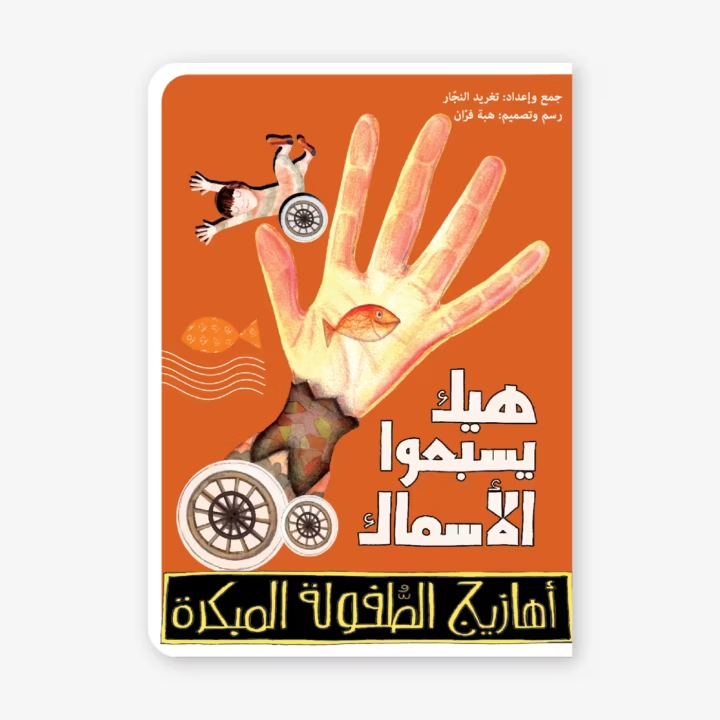
How Fish Swim focuses on rhymes that are based on hand gestures. The rhymes encourages interaction between parent and child like tickling and imitations using gestures.
This helps to bond child and parent and fills up the house with the sound of laughter and giggles.
The titles of the rhymes in the book are:
- Zait, Zait ya Hajjeh
- Hanna and the Bees
- My Small Bird
- Ten Fingers
- The Rabbit is in the cave
- Ya Baah Ya Baah
- Ya Mnaimneh
- Small as a Kubbeh
- Hijallah
- This is the Way Fish Swim
- What the Donkey Said
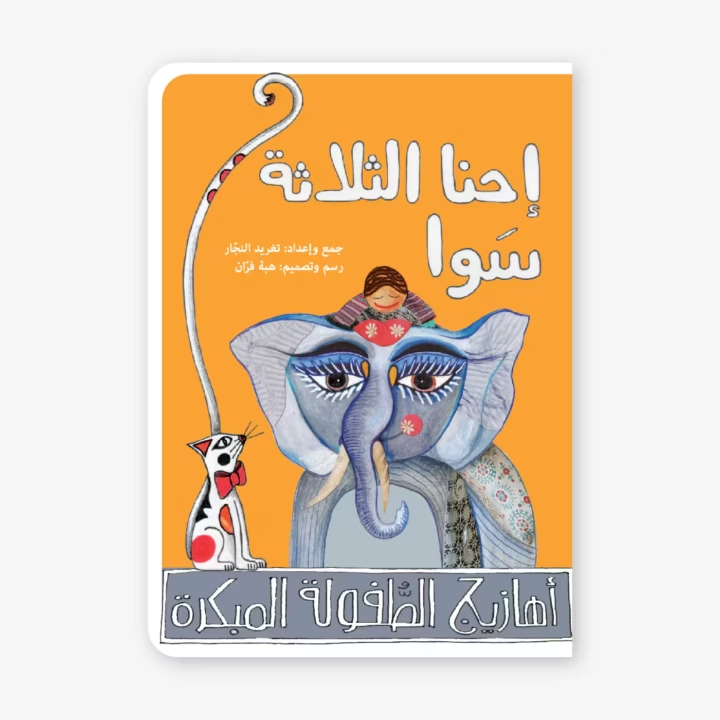
Counting games and Rhymes are common among children in many cultures. The Us Three Together book has many traditional counting rhymes that relate to basic numeracy.
It can help children learn to count to 10 or just have fun with numbers. Some of the rhymes were used as counting out games where children would chant the rhyme pointing at each child in turn and when the rhyme ended the child pointed at would be counted out of the game.
Titles of the Rhymes in this book are:
- I Have an Egg
- The Bear Got Up to Dance
- Seven Camels
- Us Three Together
- Count to Six
- Hakara Bakara
- The Fox
- How Much Do I Love You?
- Oh Flower
- Two Rabbits
- Let’s Count to 10
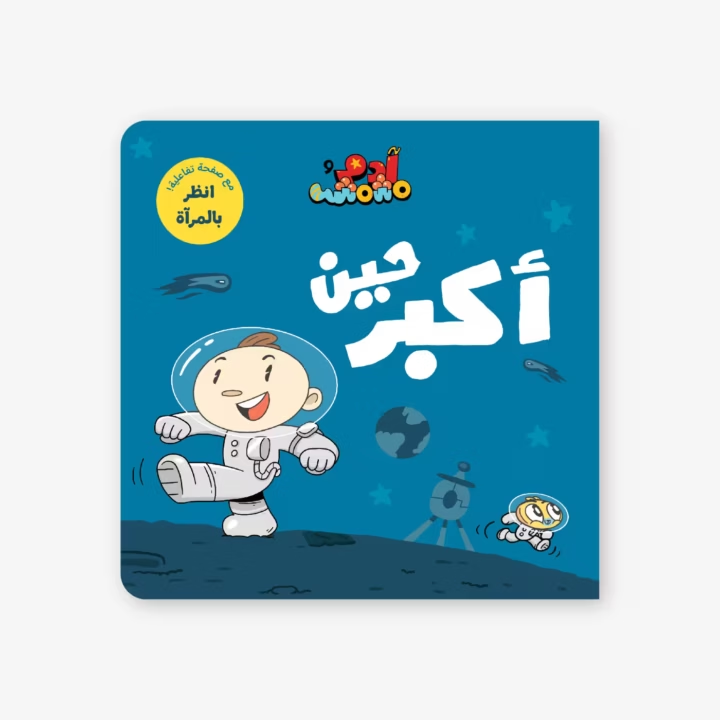
When I Grow Up is an interactive book that highlights the dreams and professions that children aspire to as they envision their future selves. It showcases occupations like painters, astronauts, doctors, and firefighters. The book concludes with an interactive page featuring a mirror, allowing each child to see themselves in these professions.
This feature makes it easier for them to imagine themselves and express their dreams while also developing their sensory and motor skills.
This book is part of the I Am Adam series by Adam Wa Mishmish. Additionally, it is connected to a YouTube song and its very own augmented reality App, both of which can be accessed by scanning the codes on the back cover of the book.
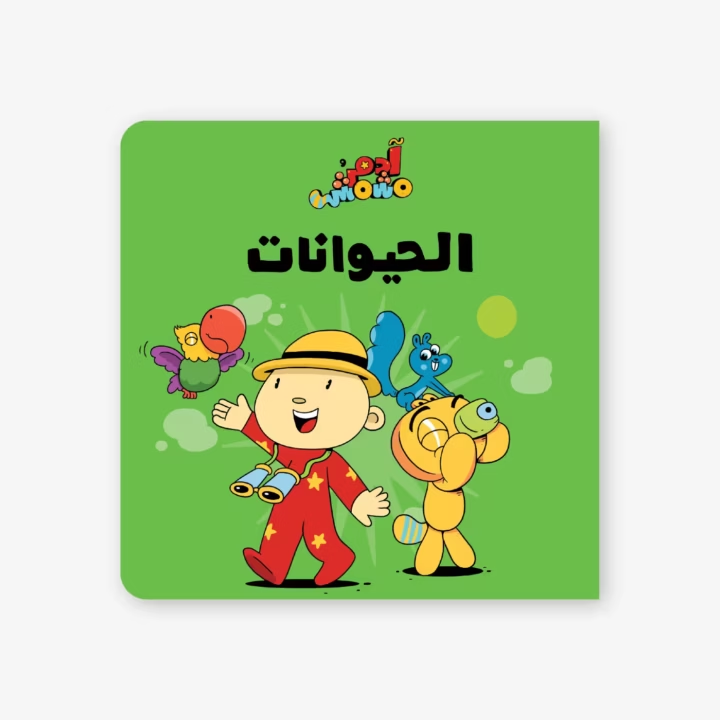
The Animals book introduces children to different animals and helps them learn about the different environments each animal lives in.
The Animals book is part of the “Lets Go Series” by Adam & Mishmish.
Each book is linked to a song and an Augmented Reality App through QR codes at the back of the book and the Series Set, so that parents and children can enjoy interacting and singing along while flipping through the book!
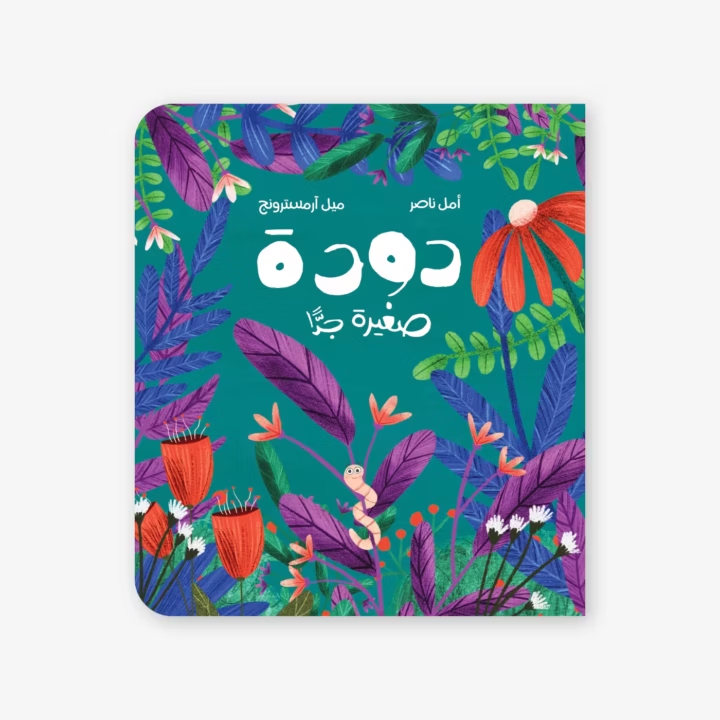
Being small is not a bad thing, especially if you are a worm and there’s a chicken chasing you!
A delightful story about a normal day in the wilderness and how it pays off to be small in size sometimes.
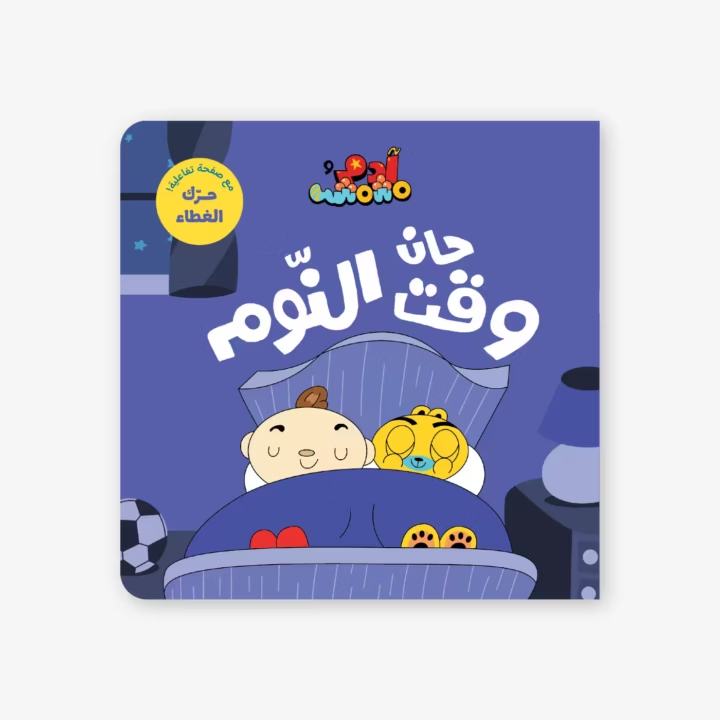
It’s Time for Bed is an interactive book that allows children to experience the bedtime rituals and habits of Adam and Mishmish. This reinforces the importance of these habits for children and helps them become a part of their daily lives.
At the end of the book, there is a felt flap where children can cover Adam & Mishmish and tuck them in before wishing them a goodnight. This allows them to develop their sensory and motor skills and solidify their bedtime routine.
This book is part of the I Am Adam series by Adam Wa Mishmish. Additionally, it is connected to a YouTube song and its very own augmented reality App, both of which can be accessed by scanning the codes on the back cover of the book.
Reviews
There are no reviews yet.