 English
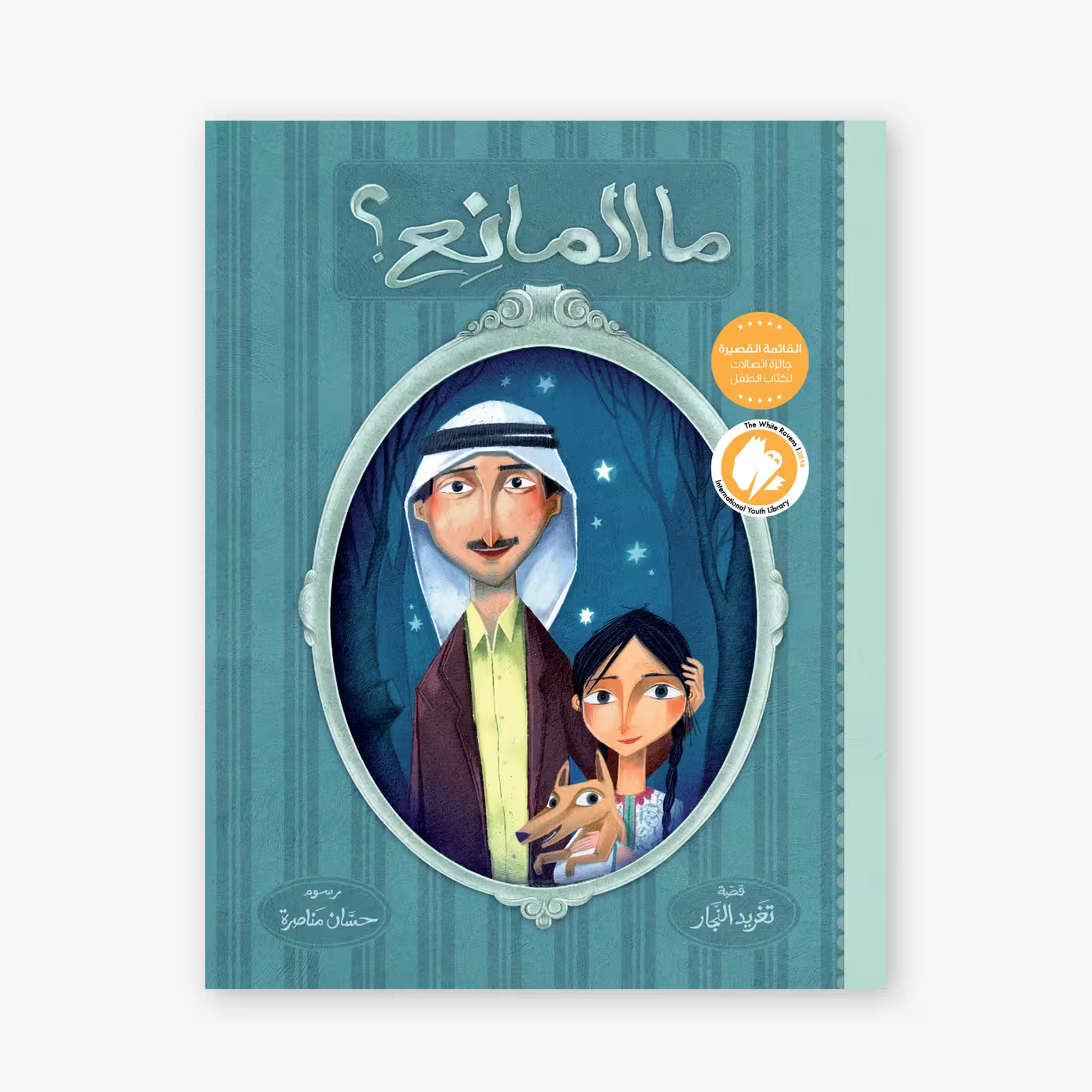
Why Not?
$ 14.30
Illustrated by:
For thirty years, Samia’s father never missed a single day of work—until one day, he fell ill and couldn’t go out to wake people up for Suhoor.
Knowing how dedicated her father is to his duty, Samia decides to take his place for one night until he recovers. But will her father accept her stepping into the role of the Musaharati? And how will the villagers react?
A touching story that highlights values such as courage and solidarity while showcasing cherished Ramadan traditions.
It transports readers to the enchanting village of Lifta in Palestine during the 1930s.
Listen to the Musaharati song from below.
Why Not? Parent and Teacher Guide
Why Not is a story that questions the reader’s expectations and challenges the reader to think … why not?
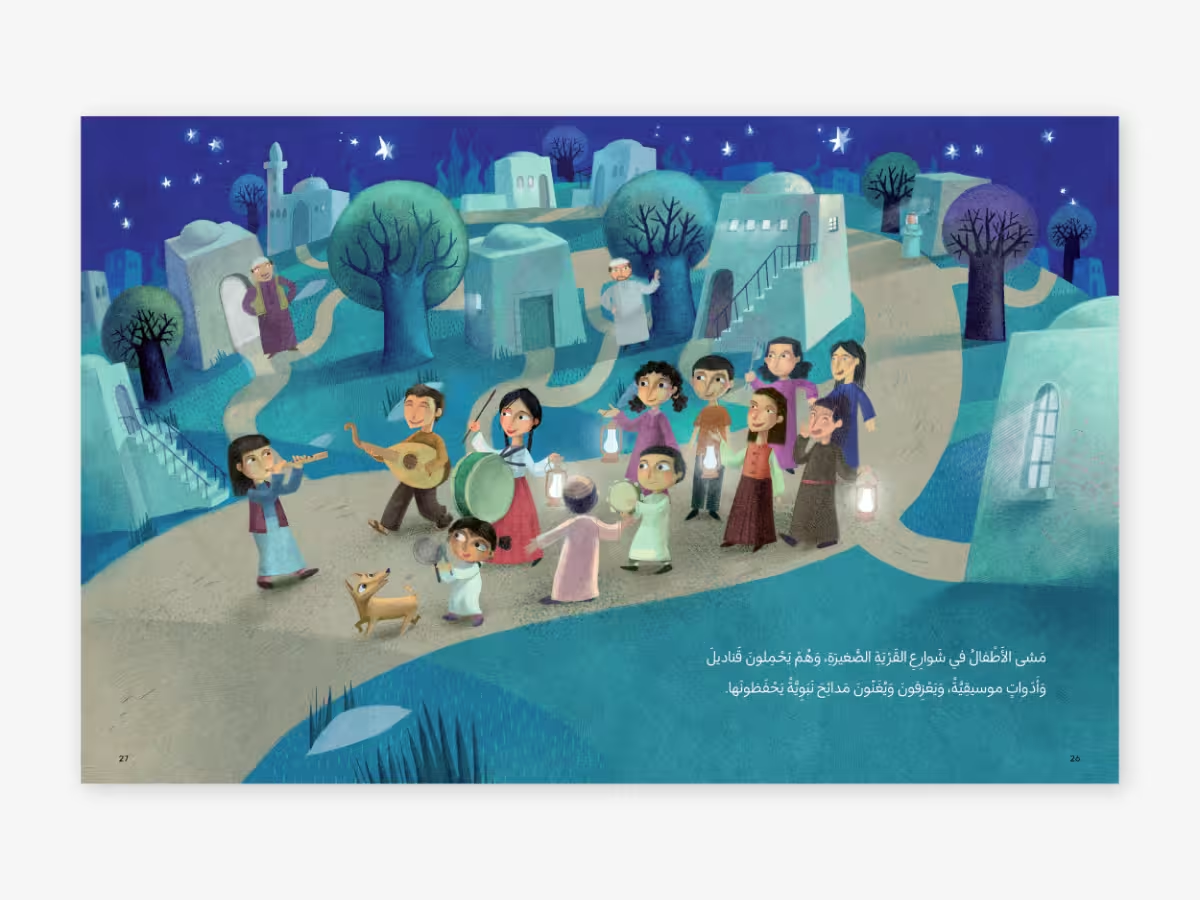
After the initial shock of hearing a girl Mosaher drumming and chanting, the villagers encourage their children to join Samia in her rounds. Each child brings with him/her a different musical instrument to help wake the village people up. The village people appreciate this and offer food to the singing children.
The story reflects the spirit of the holy month of Ramadan, which brings people together. It is also a story about the ability of girls to do any job they put their minds to, especially if they are well prepared and given the support they need. The dialogue between Samia and her sick Dad is symbolic of that.
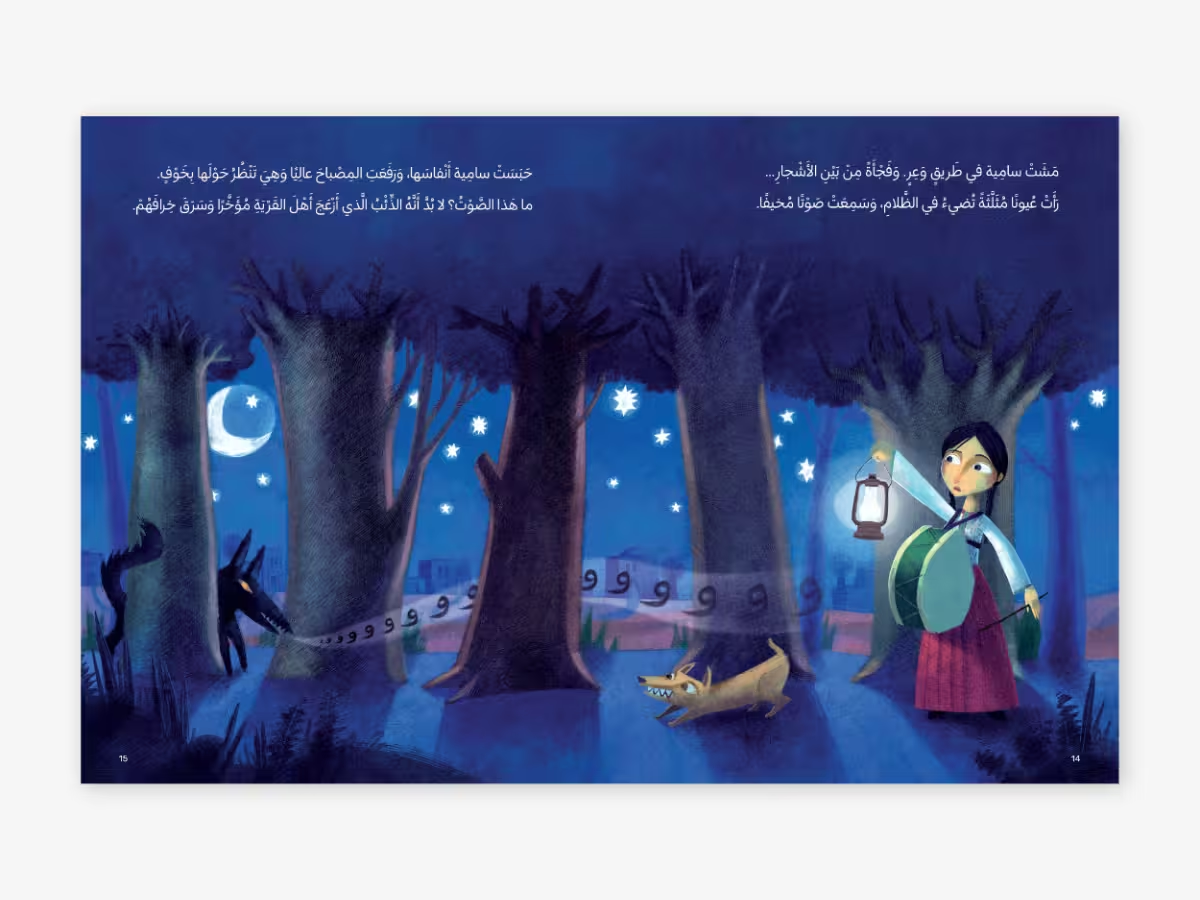
The father is worried about his daughter and raises issues of concern which Samia reassuringly has an answer to; to protect herself from wild animals, she will take their dog “Barq” with her. To light up the darkness of the night, she will take a lantern with her. To find her way, she will navigate by the night stars. To know what she has to do, she reminds her father that she is well trained in what she is going to do, as she has accompanied and assisted him countless times.
The story also shows the ingenuity of children and suggests that sometimes traditions can be altered without damaging a community’s values or the spirit of an occasion. In the story, the children who join Samia do not all have drums, the instrument traditionally used by the Mosaher to wake people up.
Each child in turn asks if it is possible to bring another musical instrument some even bring a pot and spoon. Samia laughingly says, “why not?” and allows a new practice. Towards the end of the story, the children end up forming an impromptu musical group and roam the streets singing and chanting.
“Why Not?” is a touching story of courage, solidarity and celebrating traditions. It will transport the reader to the enchanting village of Lifta in Palestine during the 1930s.
(In the olden days, before clocks and alarms were commonplace, the Mosaher was the man whose job was to wake people up for the early morning meal in Ramadan called “Suhoor”. Traditionally he did that by using a drum and chanting to coax people to wake up and eat before the fast begins.)

Questions for discussion
- How did Samia feel when she decided to become the musaharati? Did she feel excited or scared? Why?
- If you were in Samia’s place, would you feel brave or hesitant? Why?
- Have you ever been afraid of the dark like Samia? How did you react?
- If you were a musaharati for one night, how would you wake people up? Would you use a drum or something else?
- Imagine living in the village of Lifta in the 1930s. What would Ramadan be like there?
- Why do you think the villagers respected and loved Samia’s father?
- How can teamwork be helpful, just like when the children joined Samia?
- Why is it important to preserve beautiful traditions like the musaharati?
- Do you think Samia’s father was right to worry about her? Why?
- What do you think of the children’s actions when they decided to help Samia?
- What might have happened if Samia had not helped her father?
| ISBN | 9789957040727 |
|---|---|
| Pages | 32 pages |
| Binding | Hard Cover |
| Weight | 0.345 kg |
| Size | 27 × 21 cm |
Only logged in customers who have purchased this product may leave a review.
Related Products
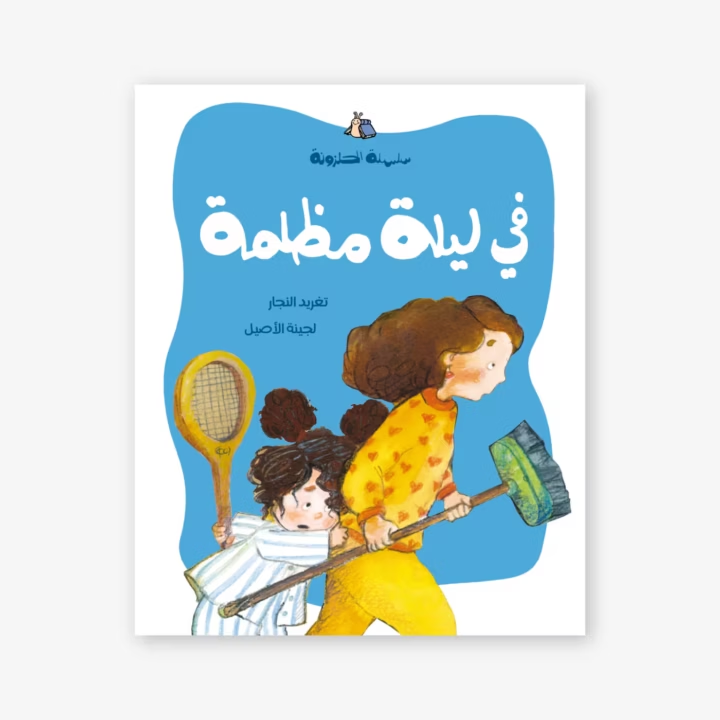
One night, Jumana persuades her little sister Jude to watch a scary movie, but when they hear a mysterious noise from the kitchen, they start to wonder— is it real or just their imagination?
This lighthearted story delivers laughs while gently emphasizing the importance of boundaries and setting careful TV choices.
The story has a quick and funny resolution, helping young readers understand why their parents set boundaries on what they watch. Perfect for children who enjoy a little adventure and humor!
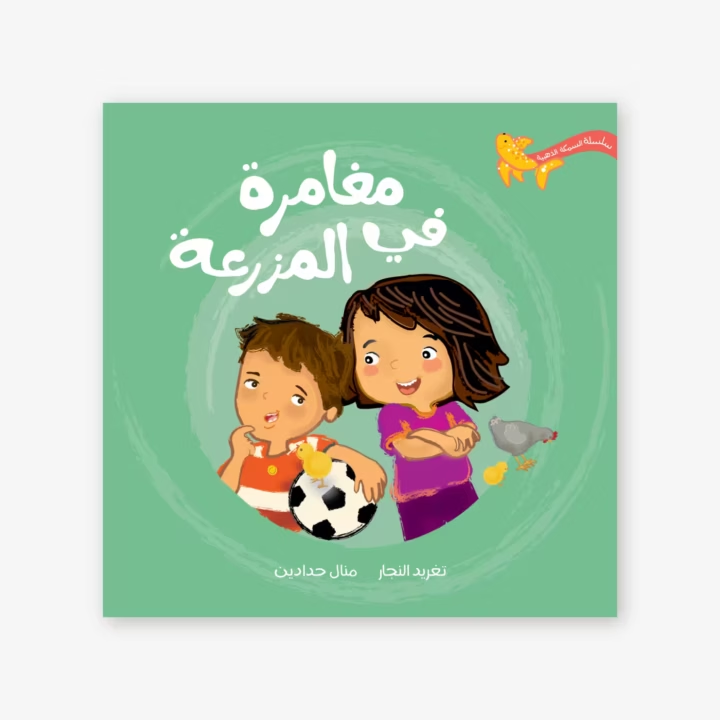
Razan is having a fun day with Zain at the farm, when suddenly Tarek falls into the pool! Will Tarek be okay? Can Razan save him? Lift the flap to find out what happens!
An engaging story that reminds children of the importance of safety while playing. In moments of danger, the first to do is to seek help from an adult, then if possible find a solutions that doesn’t endanger their own safety—just like Razan did.
A perfect story to highlight pool safety and celebrates children’s resourcefulness.

In this story Jude introduces us to the variety of roles that she plays in her everyday life, such as being a daughter, a granddaughter, a sister, a friend and how these roles bring joy and different experiences.
This charming story encourages children to embrace their unique identities, take pride in who they are and help them to understand the value of human relationships —all while having fun and exploring what makes them special. Perfect for young readers discovering their individuality!
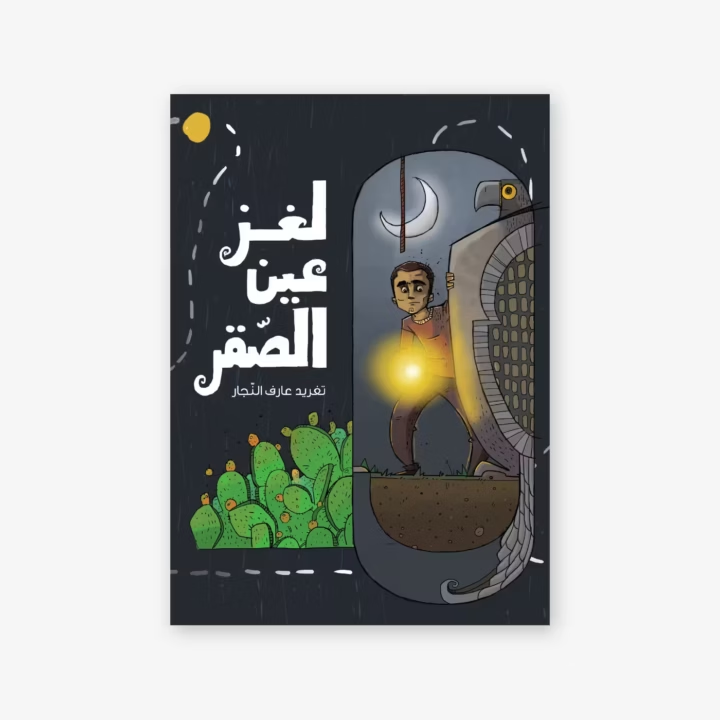
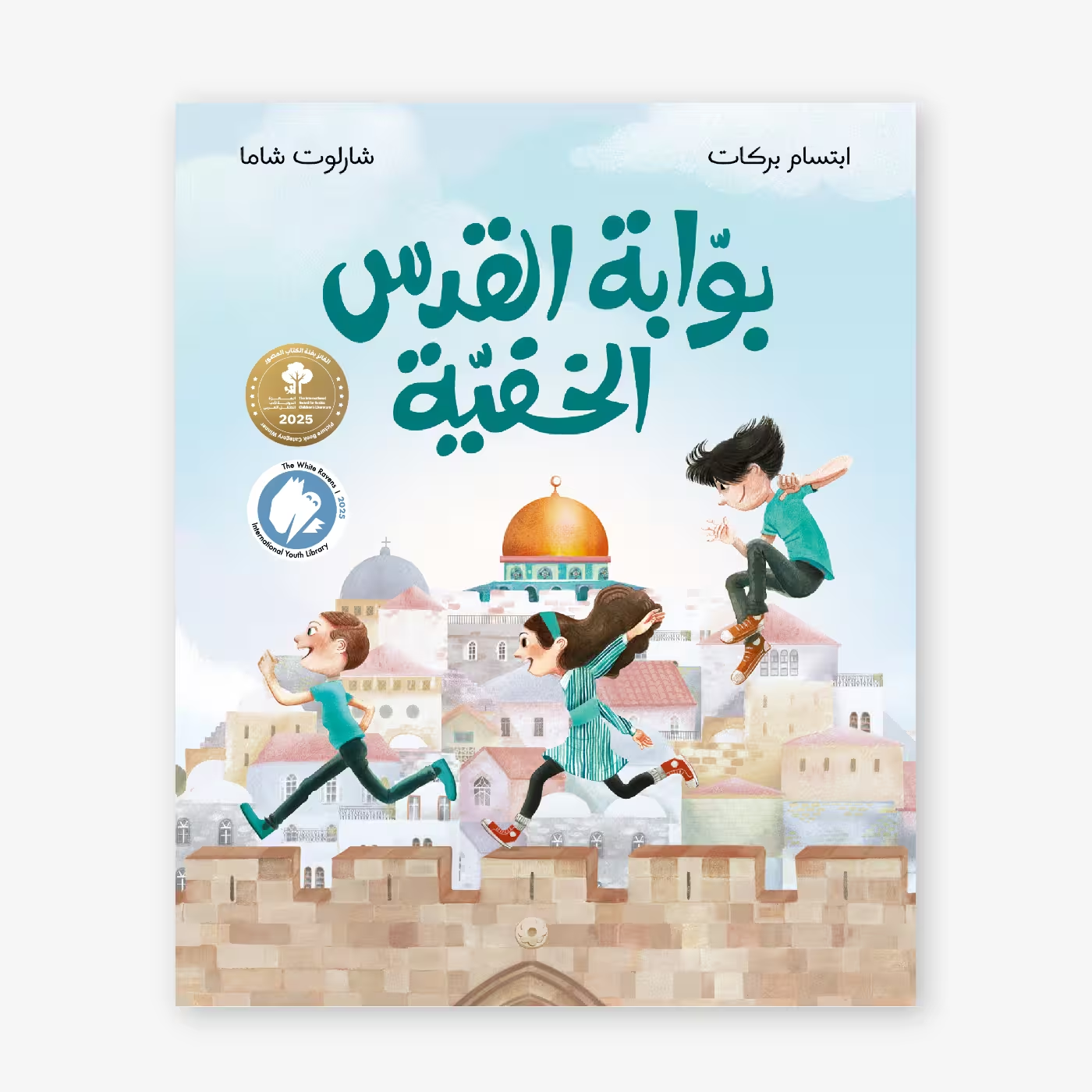
17-year-old Ziad who lives in Qalandia refugee camp finds himself the sole bread winner of his family after his activist father gets arrested and becomes an administrative prisoner.
We first meet Ziad while he’s selling hot tea to a long line of people waiting in their cars to cross the checkpoint. Ziad lives with his great grandmother, mother, sister and younger brother. His great Grandma is senile and keeps repeating stories of the past but there is one story – in particular- that never changes. It is the story of the family’s lost gold left in their village – Lifta – when they were forced to flee during the war.
It is a story about yearning to ‘return’ to the ancestral village his people were forced to leave and not allowed to return.

Every time Jude sits down to do her homework, she suddenly remembers something very important she needs to do first.
Just then, the doorbell rings—it’s her friends! Will Jude be able to join them for some fun?
An engaging story that teaches young readers the importance of time management and finding the right balance between study and play. Perfect for helping children develop good habits in a fun and relatable way!
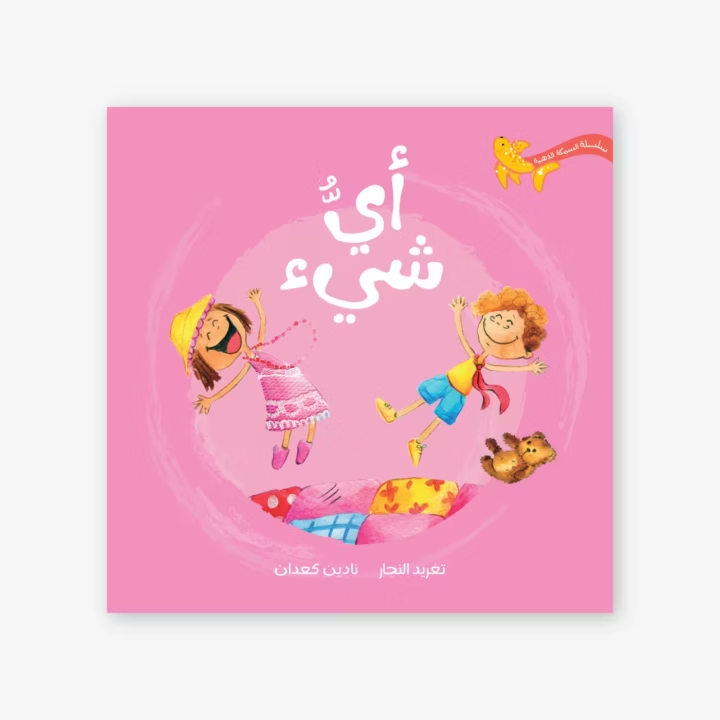
Samar and Rami spend a fun afternoon play-acting, while their mothers heads to the market. When their mothers returns, they bring back three amazing surprises—what could they be? Lift the flap to find out!
This charming story encourages role play, an essential part of childhood development, helping children understand the world around them.
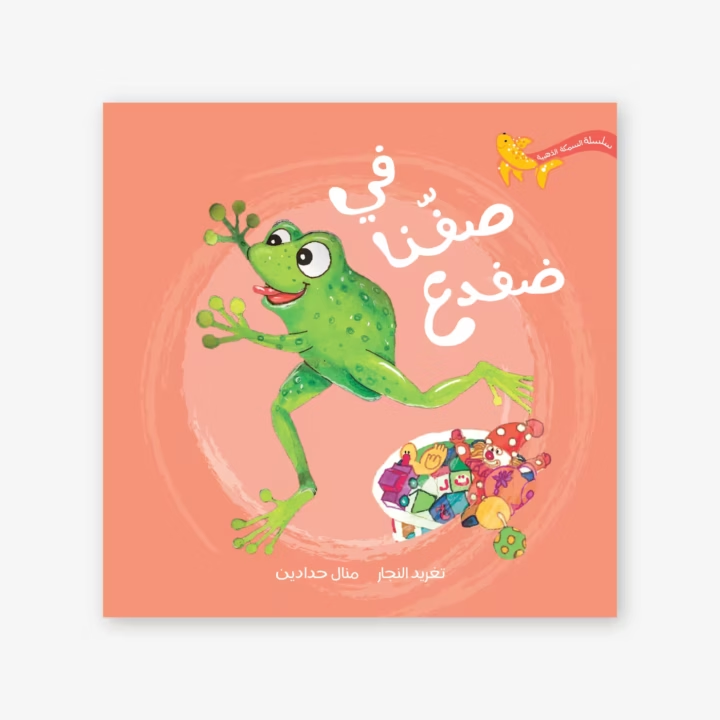
Basil and Rana discover frog eggs in a small pond and take them to school to observe the development of the frogs’ life cycle.
But when the tadpole grows up it is a lonely and unhappy frog. Will the children realize that and set him free? Lift the flap to find out!
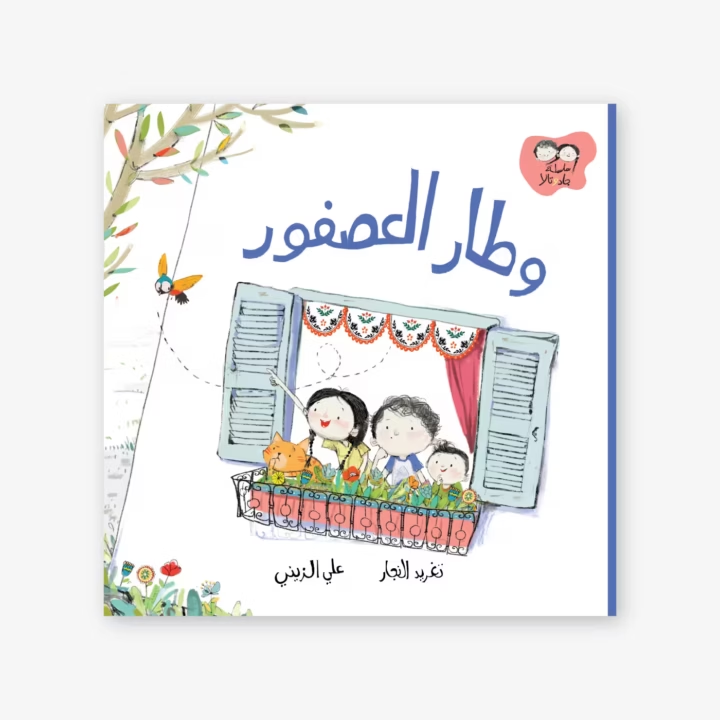
While Jad is playing in the garden, a bird falls on the ground right in front of him. Jad gently carries the bird and tries to revive it, then he and his sister Tala put the bird in a box in Jad’s room. They make sure the door remains closed to protect the bird from their cat Fustuq.
The next day the bird is nowhere to be found. Whatever happened to the bird and where did it go?
Reviews
There are no reviews yet.